
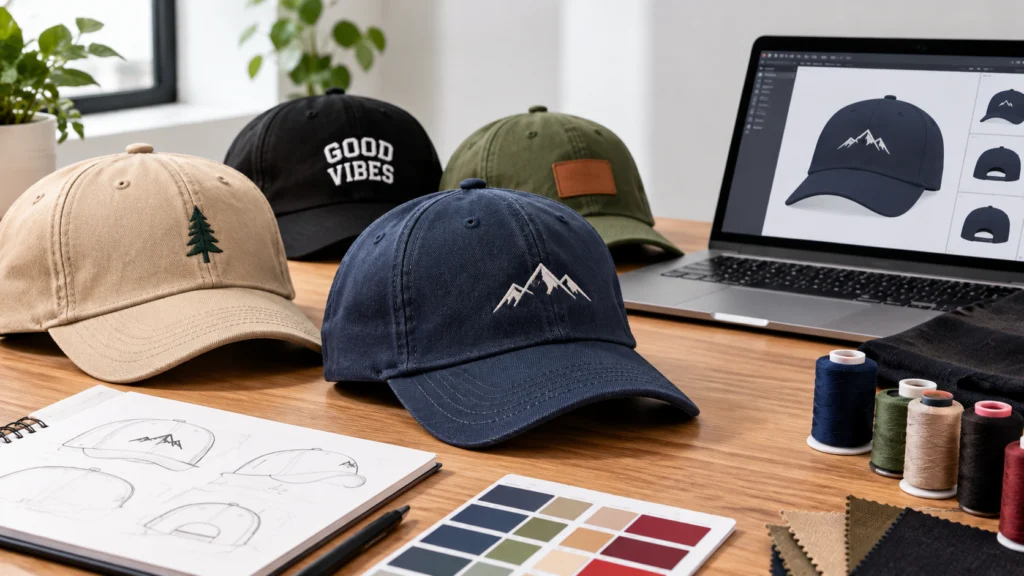
Custom caps have become an important part of modern fashion, business branding and personalised merchandise. From embroidered baseball caps and bold streetwear designs to promotional headwear for businesses, a well-designed cap can help a brand stand out and give customers something they genuinely want to wear.
However, creating a cap that looks attractive is only the beginning. If you want your custom caps to sell quickly, you need to consider your target audience, cap style, colours, logo placement, embroidery quality, pricing and overall product presentation.
The most successful designs are not necessarily the most complicated or expensive. Often, a simple design with the right colours, comfortable fit and carefully positioned embroidery can be more appealing than a cap covered in unnecessary graphics.
At Custom Baseball Caps UK, we believe that great headwear starts with understanding what customers value. Whether you are launching a clothing brand, creating promotional merchandise, designing team caps or developing a new product collection, making the right design decisions can help you create caps with stronger commercial appeal.
In this guide, we will explain how to design custom caps that sell fast, explore popular design approaches, discuss embroidery and personalisation options, and share practical strategies for turning your ideas into attractive products.
1. Understand Your Target Audience Before Designing
Before choosing a cap colour or creating a logo, decide who you want to buy your product.
Different customers have different expectations. A streetwear enthusiast may prefer a bold snapback with distinctive embroidery, while someone looking for everyday headwear might choose a classic curved-brim baseball cap with a small logo.
Similarly, a company ordering caps for employees will have different priorities from a fashion brand creating products for retail customers.
Understanding these differences helps you avoid spending time developing designs that do not suit your intended market.
Identify Your Ideal Customer
Start by considering the following questions:
- Who is most likely to wear your caps?
- Are you targeting fashion-conscious shoppers, sports enthusiasts, businesses or teams?
- Will customers wear the caps every day or mainly for specific activities?
- Do they prefer minimalist designs or bold graphics?
- What price range would be reasonable for your audience?
- Which colours and cap styles complement their existing wardrobes?
For example, a lifestyle brand targeting customers who prefer understated clothing might develop a collection of neutral baseball caps with small embroidered initials.
A sports-inspired clothing label could choose structured caps with contrasting colours, bold lettering and distinctive front-panel designs.
The goal is to create a product that feels relevant to the people you want to reach.
Design for a Specific Market
Instead of creating one cap that tries to appeal to everyone, consider developing a small collection for clearly defined audiences.
You could explore caps for outdoor enthusiasts, fitness communities, casual fashion, corporate teams or independent clothing brands.
Each collection should have a consistent visual identity while offering enough variety for customers to find a design they like.
When your designs speak directly to a particular audience, your marketing can become more focused and your product range easier to understand.
2. Choose the Right Baseball Cap Style
The base cap plays a major role in the final appearance of your design. Even excellent artwork can look out of place when applied to a style that does not suit the intended product.
Before finalising your graphics, consider the cap’s crown, brim, panels, fastening and material.
Classic Baseball Caps
Classic baseball caps are versatile and suitable for a wide range of customers. Their familiar shape makes them a strong starting point for everyday fashion, sports merchandise and business branding.
They can feature curved brims, adjustable closures and structured or unstructured crowns.
A simple embroidered logo can work particularly well on a classic baseball cap because the design remains easy to recognise without overwhelming the overall appearance.
Snapback Caps
Snapbacks usually feature a structured crown, a relatively flat brim and an adjustable plastic fastening.
Their distinctive shape makes them popular for streetwear, sports-inspired fashion and statement merchandise.
Bold lettering, initials, geometric symbols and larger front-panel graphics can complement this style.
Trucker Caps
Trucker caps typically feature a structured front and breathable mesh back. They are suitable for outdoor brands, casual clothing collections, events and promotional merchandise.
The front panel offers space for embroidery or an appropriate patch, while contrasting materials can add visual interest.
Dad Caps
Dad caps usually have a softer crown and curved brim. Their relaxed appearance makes them suitable for minimalist branding, casual fashion and everyday wear.
Small embroidered symbols, understated lettering and tonal thread combinations can help create a refined finish.
Fitted Caps
Fitted caps offer a more specific fit and often feature a structured crown. They can work well for sports-inspired clothing, team merchandise and brands that prefer a clean, defined silhouette.
When choosing a fitted style, make sure your size range suits the customers you intend to serve.
Design tip: Choose the cap style before finalising the artwork. This helps you create a logo that works with the available space, fabric and overall shape.
3. Keep Your Cap Design Simple and Recognisable
One of the most important principles in custom cap design is simplicity.
A cap has a relatively small decoration area compared with a T-shirt, jacket or hoodie. This means every design element needs to serve a purpose.
Too many colours, complicated illustrations, lengthy slogans and multiple logos can make a cap look cluttered. They can also make embroidered artwork more difficult to reproduce clearly.
A focused design gives customers something they can recognise quickly.
Use One Main Design Element
Start with a single focal point, such as:
- Your brand logo.
- A distinctive symbol.
- A short word or phrase.
- A set of initials.
- A simple illustrated emblem.
- A recognisable graphic connected to your niche.
You can introduce smaller details on the side or rear of the cap if they improve the design.
However, avoid adding extra decoration simply because space is available.
Think About Recognition at a Distance
Imagine your cap being worn in a photograph, displayed on a product page or viewed from across a room.
Would someone be able to recognise the main design?
If the logo depends on tiny lettering or numerous fine details, consider simplifying it. Strong silhouettes, readable typography and clear spacing generally work better on small surfaces.
A memorable design does not need to explain everything about your brand. It needs to communicate one clear idea effectively.
4. Select Colours That Customers Want to Wear
Colour influences the personality of your cap and how easily customers can coordinate it with their clothing.
A carefully selected colour palette can make your products feel more cohesive and appealing, while poorly matched colours may weaken an otherwise strong design.
Start With Versatile Colours
Black, navy, charcoal, white, beige and grey are useful starting points for many cap collections.
These colours can complement different outfits and provide a suitable background for a wide range of embroidery styles.
For example, a navy baseball cap with white embroidery can create a crisp, classic appearance. A beige cap with dark brown stitching can feel understated and contemporary.
A black cap with tonal black embroidery may suit a brand that prefers subtle detailing.
Experiment With Accent Colours
Once you have established your core colours, consider introducing a few distinctive alternatives.
Olive green, burgundy, rust, royal blue and other carefully chosen shades can help your collection develop a recognisable identity.
The right choices depend on your audience and brand personality.
A sports-inspired collection may benefit from stronger colour contrasts, while a premium casualwear range might work better with muted tones.
Get the Contrast Right
Your embroidery thread should be visible against the cap fabric unless a tonal appearance is intentional.
A dark logo on a dark cap can look elegant, but the difference in shade needs to be sufficient for the design to remain visible.
Similarly, bright thread on a light cap can create a strong statement, but too many competing colours may distract from the main logo.
Before approving production, review the proposed thread and fabric combination together.
If possible, assess a physical sample or a realistic mockup rather than relying only on isolated colour swatches.
5. Design Custom Caps With Embroidery in Mind
Embroidery is an excellent option for creating personalised baseball caps with a textured, professional appearance.
Unlike a flat graphic printed on fabric, embroidery uses thread to build the design directly onto the cap or onto a patch that is attached to it.
However, embroidery has its own technical requirements. Artwork that looks excellent on a computer screen may need adjustments to work properly as stitching.
Flat Embroidery
Flat embroidery is suitable for many logos, lettering, symbols and simple illustrations.
The thread sits relatively close to the surface of the fabric, creating a traditional stitched appearance.
It is a versatile choice for company logos, team names, brand initials and understated fashion designs.
3D Puff Embroidery
3D puff embroidery uses foam beneath the stitching to create a raised effect.
It can be particularly effective for bold lettering, large initials and simple shapes on suitable structured caps.
This technique is often associated with statement headwear and streetwear designs.
However, very small lettering, narrow lines and intricate artwork may not be suitable for puff embroidery. Simplifying the design can help produce a cleaner result.
Choose the Right Stitching Approach
The ideal embroidery method depends on your artwork, cap construction and desired appearance.
Before production, consider:
- The size of the logo.
- The thickness of the lettering.
- The number of thread colours.
- The amount of fine detail.
- The shape and structure of the cap panel.
- The intended visual effect.
Your embroidery supplier can advise whether the artwork should be adjusted or digitised differently.
Important: Do not assume that increasing the number of stitches or adding more colours will automatically improve a design. Good results come from matching the artwork to the decoration method.
6. Create Logos That Look Excellent on a Cap
Your logo is often the most recognisable feature of a branded cap, so it deserves careful attention.
A logo designed for a website header or large advertising graphic may not translate directly to a small embroidered surface.
For example, a detailed logo might contain a tagline, multiple symbols and fine outlines. When reduced to cap size, these elements can become difficult to read.
Simplify Complex Artwork
Consider developing a cap-specific version of your logo.
This could include a simplified symbol, a shortened brand name or a set of initials that preserves the main identity of your business.
You do not necessarily need to redesign your entire brand. The aim is to create a version that works within the practical limits of the cap.
Select Readable Typography
Typography can make or break a custom cap design.
Thick, clearly defined lettering is generally easier to reproduce in embroidery than extremely thin fonts or tightly spaced characters.
If your brand name is long, consider using a symbol or initials on the front and reserving the full name for another part of your marketing.
Maintain Consistent Branding
If you plan to sell multiple cap designs, establish a consistent visual system.
Use recognisable colours, recurring symbols, complementary fonts and a coherent design style across your products.
This helps customers understand that the products belong to the same brand, even when individual caps feature different graphics.
7. Choose the Best Logo Placement
Logo placement affects the balance, visibility and personality of a cap.
The front is the most obvious location, but the side and rear panels can also offer useful opportunities for personalisation.
Front-Centre Placement
A centred front logo is a classic option for branded baseball caps.
It provides a clear focal point and works well for company branding, team emblems, wordmarks and statement graphics.
The size should suit the cap panel rather than dominate it unnecessarily.
Small Front Logos
A smaller front logo can create a subtle, fashion-focused appearance.
This approach works particularly well for minimalist brands, lifestyle merchandise and caps designed for regular everyday wear.
Side Embroidery
Side-panel embroidery adds a secondary detail without competing with the main logo.
You might use a small symbol, initials, a short phrase or a simple graphic.
Check the available panel space and seams before deciding on the design.
Rear Branding
The rear of the cap can accommodate small lettering, a website address, a symbol or other supporting details.
For example, a clothing brand might place its main logo on the front and add a small embroidered emblem above the rear fastening.
Keep secondary branding restrained so that the overall design remains balanced.
8. Design Caps for Specific Niches
A focused product range can make it easier to develop relevant designs and reach the right buyers.
Rather than producing random graphics, consider what makes your intended audience unique.
Streetwear Caps
Streetwear designs often benefit from strong typography, distinctive symbols, carefully selected colours and clear visual identity.
Snapbacks and structured baseball caps can be suitable choices, depending on the collection.
Sports and Team Caps
Sports-related caps may feature team names, initials, mascots or simplified badges.
Make sure the design remains readable and consistent with the team’s colours.
If you are producing merchandise for an existing team or organisation, obtain permission to use its protected branding where required.
Outdoor and Lifestyle Caps
Outdoor-inspired designs can incorporate simple landscape illustrations, nature-related symbols, adventure themes and earthy colours.
Trucker caps and classic baseball caps may work well for these collections.
Business and Corporate Caps
Business caps usually need to balance brand recognition with everyday wearability.
A clean logo, appropriate colours and comfortable construction can help create a professional product for employees, clients or promotional campaigns.
Personalised Gifts
Custom caps can also be created for birthdays, group trips, clubs, family occasions and special events.
Names, initials, dates and short messages can make the products feel more personal.
The important thing is to tailor the design to the intended wearer rather than using the same template for every customer.
9. Focus on Quality, Not Just Appearance
A visually attractive cap may attract attention, but the product also needs to meet customer expectations when it arrives.
Material, construction, stitching, fit and fastening all influence the finished result.
If you are developing caps for retail sale, request a sample before committing to a larger production run whenever possible.
Check the Cap Construction
Inspect the crown shape, brim, seams, inner sweatband and fastening.
Make sure the cap feels suitable for its intended purpose and that the selected style complements the design.
Review the Embroidery
Look for clean lettering, consistent stitching and a balanced logo position.
Check that the artwork is not distorted by the shape of the panel and that the thread colours match the approved design.
Assess Comfort and Fit
Consider the cap’s weight, crown depth, adjustability and intended wearer.
A cap can look excellent in a photograph but still disappoint customers if it feels uncomfortable.
Confirm Production Details
Before placing a larger order, clarify the material, decoration method, colour, quantity, delivery expectations and approval process.
Good preparation helps you avoid costly misunderstandings and gives you greater confidence in the final product.
10. Use Custom Patches to Create a Distinctive Look
Embroidery is not the only way to create interesting custom caps.
Patches can introduce different textures, shapes and finishes that help distinguish one product from another.
Embroidered Patches
These offer a stitched, textured appearance and can be suitable for badges, emblems and brand symbols.
Woven Patches
Woven patches can reproduce certain fine details and small lettering more clearly than some traditional embroidered designs.
PVC Patches
PVC patches provide a raised, rubber-like finish that can suit outdoor headwear, modern graphics and streetwear collections.
Leather Patches
Leather patches can create a heritage-inspired or premium appearance, depending on the material, colour and shape.
When Should You Choose a Patch?
Patches can be useful when your artwork requires a distinct border, a different material texture or a level of detail that is difficult to achieve through direct embroidery alone.
The right option depends on the design and the cap construction.
Compare the appearance, attachment method and production cost before making your final decision.
11. Create Product Designs That Photograph Well
For online sales, customers often judge a cap through photographs before they have an opportunity to examine the actual product.
Your product imagery should communicate the cap’s appearance, decoration and quality as clearly as possible.
Use Clear Main Product Images
Your primary image should show the complete cap against a clean background.
Make sure the front logo is visible and the cap is positioned so that customers can understand its shape.
Avoid unnecessary objects that distract attention from the product.
Show Close-Up Details
Include additional images that reveal the embroidery, fabric texture, brim, fastening and side profile.
Close-up photography can help customers assess details that may be difficult to understand from a standard product image.
Show the Cap Being Worn
Lifestyle photographs can demonstrate how the cap looks with everyday clothing.
Choose settings and outfits that match your target audience rather than using unrelated imagery.
Keep the Images Consistent
Use a consistent photography style across your collection.
Similar lighting, backgrounds and image angles can make your website look more professional and help customers compare products.
If you are selling online, accurate product images are especially important. Do not rely on a mockup that significantly exaggerates the embroidery size or changes the actual cap colours.
12. Price Your Custom Caps for Sustainable Sales
Pricing influences how customers perceive your product and whether your business can generate a sustainable return.
A low price does not automatically mean a cap will sell quickly. Likewise, a higher price needs to be supported by the product’s quality, design, presentation and perceived value.
Start by calculating your actual costs.
These may include:
- The blank cap.
- Artwork preparation and digitisation.
- Embroidery or patch production.
- Packaging.
- Shipping and fulfilment.
- Marketplace or payment fees.
- Marketing expenses.
- Allowances for defects, returns or replacements.
Once you understand the total cost, decide on a selling price that supports your business goals.
Consider Different Product Levels
You could offer a basic cap with simple embroidery, a premium option with more detailed decoration, and a limited-edition design featuring distinctive materials or patches.
This gives customers different options without forcing every buyer into the same price range.
Test Before Ordering Large Quantities
If you are launching a new collection, consider testing a small range before investing heavily in stock.
Customer feedback, product-page engagement and actual sales can help you decide which designs deserve further development.
There is no guaranteed formula for fast sales, but testing reduces the risk of committing too much money to designs that have not yet demonstrated demand.
13. Build a Strong Product Collection
A collection usually benefits from a clear theme rather than a random assortment of unrelated caps.
Your designs should feel connected through colours, typography, graphics or the story behind the brand.
For example, a collection might include three core designs:
- A minimalist cap with a small embroidered emblem.
- A bold cap featuring a larger front logo.
- A premium cap with a contrasting patch.
Each product provides a different choice while maintaining a consistent identity.
Offer Useful Colour Variations
Once a design works well, consider testing it in a few suitable colour combinations.
Black and navy may appeal to customers who prefer versatile headwear, while beige, olive or brighter colours can provide alternatives.
Avoid introducing too many variations before you understand which ones customers prefer.
Develop Seasonal or Limited Collections Carefully
Seasonal designs and limited-edition releases can give customers a reason to explore new products.
However, the design should still have a clear purpose and appeal to your target market.
Use genuine production limits or release dates when describing limited collections. Avoid creating false scarcity simply to pressure customers into buying.
14. Improve Your Website for Custom Cap Sales
Even a strong design needs a clear path from discovery to purchase.
Your website should make it easy for customers to understand the product, review the available options and place an order.
Write Descriptive Product Titles
Use titles that clearly explain what the product is.
For example, “Custom Embroidered Baseball Cap” is more descriptive than a vague name such as “The Essential.”
If the cap has a distinctive style, colour or feature, include that information naturally.
Explain the Benefits Clearly
Product descriptions should explain the cap’s style, material, fastening, decoration and intended use.
Avoid relying on generic statements such as “high quality” without explaining the features that support the claim.
Make Customisation Options Easy to Understand
If customers can choose colours, logo placement or embroidery options, present those choices clearly.
Explain which artwork formats you accept and whether design adjustments may be necessary.
For larger custom orders, provide a straightforward way for customers to request a quotation or discuss their requirements.
Make Ordering Simple
Customers should be able to find important information about pricing, delivery, customisation and returns without unnecessary effort.
Clear product information helps people make informed decisions and reduces confusion during the ordering process.
15. Use SEO to Help Customers Discover Your Caps
Search engine optimisation can help your custom cap business reach people who are actively looking for relevant products.
Instead of targeting only broad terms, build useful content around the different needs of your audience.
Target Relevant Product Keywords
Depending on the products you offer, relevant keywords might include:
- Custom baseball caps UK.
- Custom embroidered baseball caps.
- Personalised baseball caps.
- Custom caps for businesses.
- Embroidered caps for clothing brands.
- Custom snapback caps.
- Custom sports team caps.
- Personalised caps with logos.
Use each keyword where it naturally fits the relevant product page or article. Avoid repeating the same phrase excessively.
Create Helpful Supporting Blog Content
Educational articles can answer questions customers ask before placing an order.
For example, you could publish guides about choosing cap styles, comparing embroidery with patches, preparing logos for embroidery and selecting colours for branded merchandise.
Each article should provide useful information rather than simply repeating product keywords.
Add Relevant Internal Links
Link your blog articles to appropriate product pages and customisation services on Custom Baseball Caps UK.
For example, an article about designing caps can link to your custom baseball caps page, while a guide to embroidery can direct readers to the relevant embroidered product range.
Use descriptive anchor text and make sure the destination genuinely relates to the surrounding content.
16. Promote Your Custom Caps Through the Right Channels
Once your designs are ready, make sure the people most likely to appreciate them can discover your products.
Different promotional channels serve different purposes, so select the ones that match your audience and budget.
Social Media
Share clear product photographs, close-up embroidery shots, styling ideas and behind-the-scenes production content.
Short videos can demonstrate the cap’s shape, fabric and stitching more effectively than a single static image.
Email Marketing
If you have permission to contact your customers, email can help you announce new collections, restocks and relevant offers.
Keep messages useful and make it easy for recipients to manage their preferences.
Influencer and Creator Partnerships
Creators whose audiences match your target market may help introduce your caps to potential buyers.
Choose partnerships based on audience relevance, authentic product fit and realistic campaign costs rather than follower numbers alone.
Business and Team Outreach
If your business supplies bulk custom caps, consider reaching out to sports clubs, event organisers, local companies and clothing brands.
Explain the available customisation options and make it easy for potential customers to discuss quantities, artwork and specifications.
Paid Advertising
Paid campaigns can help test demand, but they require careful budgeting.
Start with a clear audience, a defined product and a way to measure results. Review whether your advertising generates profitable sales rather than judging success by clicks alone.
17. Common Mistakes That Stop Custom Caps From Selling
Understanding what to avoid is just as important as knowing how to design an attractive cap.
Overcomplicating the Artwork
Too many colours, tiny details and multiple slogans can weaken the design.
Better approach: Use one main graphic and simplify the artwork where necessary.
Choosing the Wrong Cap Style
A design intended for premium casualwear may not suit a brightly coloured promotional cap.
Better approach: Match the base cap to the product’s audience and intended use.
Ignoring Embroidery Limitations
Fine lines and tiny lettering can be difficult to reproduce clearly through stitching.
Better approach: Ask your supplier to review the artwork before production.
Focusing Only on Trends
A design that follows a temporary trend may attract attention but fail to establish a lasting product identity.
Better approach: Use trends selectively while maintaining your brand’s own style.
Neglecting Product Photography
Poor lighting, unclear angles and inaccurate mockups can make a good cap appear less appealing.
Better approach: Present the real product clearly and show important details.
Ordering Too Much Stock Too Soon
A large order can tie up money before you know which designs customers prefer.
Better approach: Test a manageable range, collect feedback and expand according to actual demand.
Making Unsupported Quality Claims
Customers need reliable product information rather than vague promises.
Better approach: Describe the actual materials, construction and decoration features of each cap accurately.
18. A Practical Step-by-Step Process for Designing Caps That Sell
If you are ready to develop your first design or improve an existing collection, follow this process.
Step 1: Define the customer. Decide who the cap is for and what they value.
Step 2: Research the market. Explore competing products, customer feedback and design approaches in your chosen niche. Look for opportunities to create something distinctive rather than copying another brand.
Step 3: Select the cap style. Choose the crown, brim, material and fastening that suit the intended use.
Step 4: Develop the artwork. Create a clear logo or graphic that works within the available space.
Step 5: Choose the decoration. Decide whether flat embroidery, 3D puff embroidery or a suitable patch offers the best result.
Step 6: Finalise colours and placement. Check contrast, proportions and the relationship between the design and cap.
Step 7: Review a mockup or sample. Check the visual balance and, where possible, assess the actual cap before approving a larger run.
Step 8: Calculate your selling price. Include the full cost of production, fulfilment and marketing.
Step 9: Prepare the product page. Add accurate images, a helpful description, relevant keywords and clear ordering information.
Step 10: Test and improve. Monitor sales, customer feedback and product performance, then refine the range based on what you learn.
This approach turns cap design into a more structured business process rather than a series of guesses.
Final Thoughts: Design Custom Caps That Customers Want to Wear
Designing custom caps that sell fast requires more than an attractive logo. You need to understand your customers, choose a suitable cap style, create clear artwork and select decoration that complements the product.
Comfort, quality, colour, logo placement and photography all contribute to how customers perceive a cap. Your pricing and marketing then help determine whether the product reaches the right audience and generates a sustainable return.
At Custom Baseball Caps UK, custom headwear can serve many purposes, from everyday fashion and personalised gifts to sports merchandise and business branding. The best design approach depends on the people you want to reach and the experience you want your products to deliver.
Start with a clear idea, keep the design focused, review the production details carefully and test customer interest before expanding your range.
Most importantly, create caps that people would genuinely choose to wear. When a product combines appealing design, practical comfort and a recognisable identity, it has a stronger foundation for attracting customers and building a successful collection.
Explore custom baseball cap options at Custom Baseball Caps UK and develop headwear that reflects your brand, supports your goals and gives customers a reason to choose your designs.
Frequently Asked Questions
1. How do I design custom caps that sell fast?
Start by identifying your target audience, selecting the right cap style, creating simple and recognisable artwork, choosing suitable colours and using appropriate decoration. Test customer interest, present the products clearly and improve your range using actual feedback and sales data.
2. Which custom cap designs are best for selling online?
The best designs depend on your audience and market. Classic embroidered logos, minimalist graphics, distinctive streetwear designs and niche-specific artwork can all be worth testing. Focus on wearability, clear branding and product quality rather than assuming one design will appeal to everyone.
3. Is embroidery better than printing for custom caps?
Embroidery is well suited to many logos, lettering and textured designs. Printing may be more appropriate for certain colourful graphics or artwork that requires effects difficult to reproduce with thread. The best method depends on the cap material, design and desired finish.
4. What colours work well for custom baseball caps?
Black, navy, charcoal, beige and white are versatile options. Brighter colours can help a product stand out when they suit the brand. Always consider the relationship between the cap fabric and embroidery thread.
5. How can I make my custom cap brand stand out?
Develop a recognisable identity, select a specific audience, maintain consistent design choices and create products that offer something distinctive. Your cap’s shape, embroidery, colour combinations, product photography and overall presentation can all help differentiate your brand.
6. Should I order samples before producing custom caps in bulk?
Whenever possible, yes. Samples allow you to review the cap’s fit, material, embroidery, colours and logo placement before committing to a larger order. This can help identify problems early.
7. How can I promote custom baseball caps online?
Use relevant product pages, helpful SEO content, high-quality product images, social media, email marketing and suitable partnerships. If you use paid advertising, monitor actual sales and profitability rather than relying only on clicks or impressions.
8. What should I include in a custom cap design brief?
Include the intended audience, cap style, fabric and colour preferences, logo artwork, embroidery or patch requirements, decoration placement, quantity and desired delivery schedule. Clear instructions make it easier to evaluate whether the finished product meets your expectations.
9. Can small logos work well on custom baseball caps?
Yes. Small logos can look professional and understated, especially on casual or minimalist caps. The artwork must remain clear at the chosen size, so fine details and small lettering may need simplifying before embroidery.
10. How can I avoid unsold stock when launching a cap collection?
Research your audience, compare similar products, test a limited selection and monitor real customer responses. Avoid ordering large quantities based only on personal preference or assumptions about trends. Expand the collection as you gain reliable evidence of demand.