
Building a memorable brand takes more than a recognisable logo and an attractive website. Businesses need ways to bring their identity into everyday life, connect with their audience and create a consistent impression wherever customers encounter them. Custom caps offer a practical way to achieve these goals while combining style, comfort and useful branding opportunities.
From independent clothing labels and growing businesses to sports clubs, corporate teams and event organisers, personalised headwear can serve many different purposes. A well-designed cap can become part of a uniform, a retail product, a promotional gift or a way for customers to show their support for a brand.
However, creating effective branded headwear involves more than placing a logo on a blank cap. The style, fabric, colour, embroidery, fit and placement all influence how the finished product looks and feels.
At Custom Baseball Caps UK, the goal is to help businesses and brands explore headwear designs that reflect their identity and suit their intended audience. Whether you are planning your first branded cap or developing a new merchandise collection, understanding the available options can help you make better decisions.
In this guide, we explore how custom caps can support brand recognition, which styles are worth considering, how to choose the right decoration and what to think about before placing an order.
1. Why Custom Caps Are a Smart Choice for Branding
Marketing is most effective when people can recognise a brand and associate it with a consistent identity. Custom caps give businesses another opportunity to present their logo, colours and message outside traditional advertising channels.
Unlike a digital advertisement that appears on a screen, a physical cap can be worn repeatedly in different settings. This makes branded headwear a useful addition to a wider marketing strategy.
Make Your Brand More Visible
A cap featuring your logo can introduce your business to people who have never visited your website or followed your social media accounts.
For example, employees wearing branded caps may increase visibility during outdoor work, exhibitions or promotional events. Customers who purchase your merchandise may also wear it while travelling, shopping or spending time with friends.
The impact depends on the design, the number of people wearing the caps and how frequently they are used. A clear logo and attractive colour combination can make your branding easier to recognise.
Build a Consistent Brand Identity
Your brand identity includes more than your logo. It also involves colours, typography, visual style and the way your business presents itself.
Custom caps can complement your existing uniforms, packaging, workwear and merchandise. Using a consistent colour palette and logo treatment helps create a coordinated appearance across different products.
For example, a business using navy and white in its branding could choose navy baseball caps with white embroidery. A lifestyle brand with earthy colours might prefer olive green caps with cream stitching.
Create Useful Promotional Merchandise
Promotional products are more appealing when people can use them beyond the event where they received them.
Caps provide a practical accessory for casual wear, outdoor activities and travel. Businesses can offer them as customer gifts, include them in promotional campaigns or sell them as part of a merchandise collection.
The key is to create a product people genuinely want to wear rather than relying on a logo alone to make it attractive.
Support Your Retail Product Range
For clothing brands, custom caps can be an independent product category or a complementary item alongside T-shirts, hoodies and jackets.
A carefully designed cap can reinforce the visual identity of a collection. Different colourways, distinctive embroidery and thoughtful finishing details can also help a brand create a recognisable product range.
2. Choosing the Right Custom Baseball Cap Style
Different cap styles communicate different looks. Some feel sporty and traditional, while others suit relaxed fashion collections or contemporary streetwear.
Before choosing your design, think about your target audience, the intended use and the overall image you want to create.
Classic Baseball Caps
Classic baseball caps are a versatile option for businesses, sports clubs, promotional campaigns and everyday merchandise.
They typically feature a curved peak, a crown divided into panels and an adjustable fastening or fitted construction.
Their familiar shape makes them suitable for a wide range of branding styles, from simple embroidered company logos to more detailed team designs.
For a professional appearance, consider a black, navy or charcoal cap with contrasting embroidery. For a casual retail collection, brighter colours or distinctive details may be more appropriate.
Structured Baseball Caps
Structured caps have reinforced front panels that help the crown maintain its shape.
This construction can provide a stable surface for embroidered logos, bold lettering and designs that need a more defined appearance.
Structured caps are worth considering for corporate merchandise, sports-inspired collections and brands that prefer a clean, prominent front profile.
Unstructured Baseball Caps
Unstructured caps have a softer crown that creates a more relaxed appearance.
They can suit casual clothing brands, minimalist designs and businesses looking for everyday headwear with an understated feel.
Smaller embroidery, simple wordmarks and subtle tonal designs often work well with this style.
Trucker Caps
Trucker caps commonly combine a structured front panel with mesh panels at the back.
The mesh construction gives them a distinctive look that suits outdoor brands, lifestyle merchandise, casual clothing labels and promotional products.
A contrasting front panel can provide an opportunity to make the logo more noticeable without adding unnecessary design elements.
Snapback Caps
Snapback caps generally feature a structured crown, a flat or relatively flat peak and an adjustable snap fastening.
They are popular with streetwear labels, sports-inspired brands and businesses creating bold merchandise.
Large lettering, simplified symbols and raised 3D puff embroidery can complement this style when the artwork is suitable.
Dad Caps
Dad caps usually have a relaxed crown and curved peak, creating a casual silhouette.
They can be a good choice for independent clothing brands, creators and businesses that prefer subtle branding.
A small embroidered symbol on a neutral-coloured cap can look distinctive without overwhelming the overall design.
Five-Panel and Six-Panel Caps
The number and arrangement of panels influence the shape of a cap and the space available for decoration.
Five-panel caps often feature a broad front section that suits certain graphic designs and contemporary streetwear styles. Six-panel caps typically have a central seam on the front and a familiar baseball-cap profile.
The best option depends on your logo, preferred fit and intended aesthetic. Consider the front panel’s shape before finalising the dimensions of your artwork.
3. Why Embroidery Can Make Your Brand Stand Out
The way your logo is applied to a cap can significantly affect its appearance. Among the available decoration methods, embroidery is a popular choice for businesses seeking a textured and professional finish.
Embroidery uses thread to stitch a design into the fabric, creating a tactile effect that can give your branding more depth than a flat graphic.
A Professional Appearance
Embroidery can give company logos, initials and brand symbols a distinctive finish.
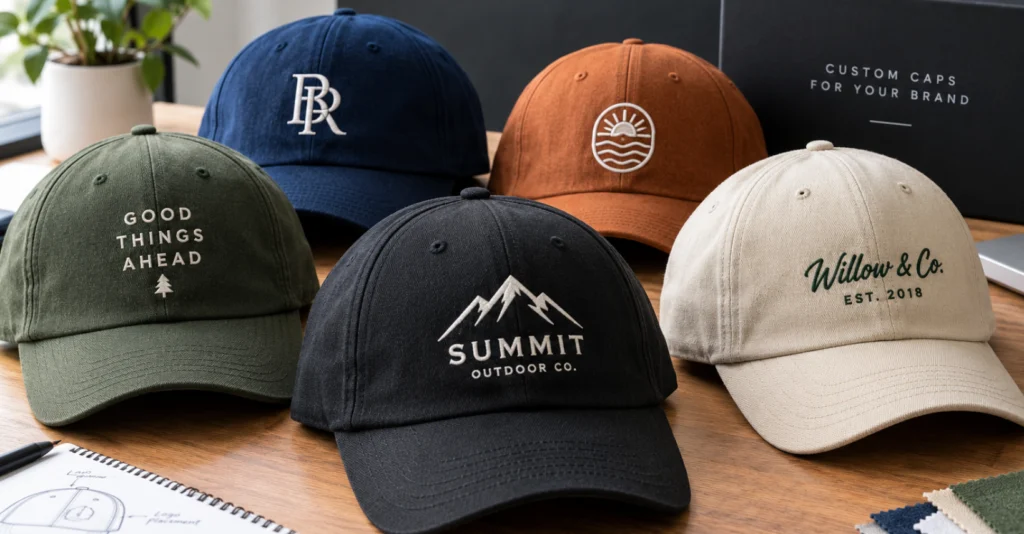
For example, a simple white logo on a black cap can create a clean, high-contrast look. Gold stitching on a dark green cap may suit a premium lifestyle brand, while tonal embroidery can create a more subtle appearance.
The best combination depends on the identity you want your product to communicate.
Flat Embroidery
Flat embroidery sits relatively close to the surface of the fabric.
It is suitable for many logos, lettering and symbols, provided the artwork can be reproduced clearly at the chosen size.
This technique is a practical option for company uniforms, sports teams, promotional merchandise and retail headwear.
Three-Dimensional Puff Embroidery
3D puff embroidery uses foam beneath the stitching to create a raised design.
It is often used for bold letters, initials and simplified graphics on structured caps. The raised texture can give a cap a more pronounced appearance, particularly for streetwear and sports-inspired merchandise.
However, not every design is suitable. Very small text, thin lines and intricate details may not reproduce cleanly with this technique.
Embroidered Patches
Patches provide another way to display branding on a cap.
An embroidered patch can create a defined badge-like appearance, while woven patches may be suitable for finer details. Depending on the design and intended use, PVC or leather-style patches may also be worth considering.
Patches can work well for outdoor labels, club merchandise and brands that want a distinct boundary around their logo.
Embroidery or Printing: Which Should You Choose?
Embroidery is often chosen for its texture and traditional appearance. Printing may be more suitable for artwork containing gradients, complex colour transitions or details that are difficult to recreate with thread.
The decision should be based on your artwork, cap material, budget and desired finish.
A simple logo may work beautifully with embroidery, while a complex illustration might require a different decoration method.
4. Designing a Logo That Works on a Cap
A logo that looks perfect on a computer screen may need adjustments before it can be reproduced on a small, curved fabric surface.
The aim is to preserve your brand identity while making sure the final design remains clear and visually balanced.
Keep Your Logo Recognisable
Start by identifying the most important elements of your logo.
This could be a symbol, a distinctive letter, your company name or a combination of these features. Avoid adding too many separate details to the front panel, particularly when the available space is limited.
A simpler design can often be easier to recognise from a distance.
Choose the Right Logo Size
The ideal logo size depends on the cap style, front panel dimensions and artwork.
An oversized logo may dominate the cap, while a design that is too small can become difficult to recognise. Ask your manufacturer to consider the usable decoration area and how the design will sit on the actual cap.
A digital mock-up can help you evaluate the proportions before approving the design.
Use Readable Typography
Text-heavy logos require particular attention because embroidery has practical limitations.
Thin lettering, tightly spaced characters and very small text may become difficult to reproduce clearly. Bolder fonts and appropriate spacing can help maintain readability.
If your business name is long, consider using a shorter version on the front and reserving additional text for the side or back.
Simplify Fine Details When Necessary
Small adjustments can make a considerable difference to the final result.
Tiny decorative lines might need to be removed, closely spaced letters may need more room, or a complicated illustration may need a simplified version.
These changes should preserve the most recognisable parts of your brand rather than altering its identity unnecessarily.
5. Choosing Colours That Represent Your Brand
Colour is an important part of visual identity. The right combination can make your cap recognisable while helping it coordinate with other branded products.
Match Your Existing Brand Colours
Begin with the colours already used on your website, packaging, clothing or marketing materials.
Consistent colour choices can help create a recognisable identity across your merchandise.
If exact colour matching is important, discuss suitable fabric and thread references with your manufacturer. Colours displayed on a screen may differ from the finished material.
Create Enough Contrast
A logo needs to remain visible against the cap.
Some popular combinations include:
- Black caps with white embroidery.
- Navy caps with light grey or white stitching.
- Cream caps with dark green embroidery.
- Forest green caps with gold or cream branding.
- Burgundy caps with white or tonal stitching.
These combinations are examples rather than strict rules. Your own brand colours and intended audience should guide the final choice.
Consider Tonal Branding
Tonal branding uses similar colours for the cap and logo, such as black stitching on black fabric.
This approach can create a subtle, understated look that suits some premium and minimalist brands.
However, too little contrast can make the design difficult to see. Consider how the cap will look in different lighting conditions before settling on a tonal combination.
Coordinate the Smaller Details
The peak, button, eyelets, mesh panels and fastening can all contribute to the finished design.
A matching peak or contrasting back panel may add character without making the logo more complicated.
Choose details that complement the main design instead of competing for attention.
6. Selecting Suitable Materials and Construction
The fabric and construction of a cap influence its appearance, comfort and suitability for different uses.
A cap designed for retail fashion may require different features from one intended for outdoor staff or sporting activities.
Cotton and Cotton Twill
Cotton and cotton-twill fabrics are common choices for casual and everyday headwear.
They offer a familiar appearance and can be suitable for many embroidered designs. The final performance depends on the specific fabric, weight and construction.
These materials are worth considering for lifestyle merchandise, company branding and classic baseball caps.
Polyester and Performance Fabrics
Performance-oriented fabrics can be useful for active environments, especially when lightweight construction and moisture management are priorities.
They may suit sports teams, outdoor businesses and staff who spend time working outside.
Consider the intended activity, breathability, comfort and care requirements before choosing a particular material.
Mesh Panels
Mesh-backed caps are a popular option for trucker-style headwear.
They offer a distinctive appearance and can provide additional ventilation compared with some fully fabric-covered designs.
When choosing this style, pay attention to the front panel’s structure and the way your logo will sit on it.
Structured and Unstructured Construction
Structured caps maintain a more defined crown shape, while unstructured caps have a softer profile.
Structured construction can suit prominent embroidery and a sharper appearance. Unstructured designs may be preferable for relaxed, casual branding.
Neither is automatically better. The right choice depends on the product you want to create.
7. Where Should You Place Your Logo?
Logo placement affects the balance, visibility and overall appearance of your custom caps.
Front-Centre Placement
The front centre is the most familiar location for cap branding.
It is suitable for company logos, team crests, brand names and distinctive symbols. If you want the logo to be the main visual feature, this is often a sensible starting point.
On six-panel caps, a central seam may influence the usable space and the way some designs can be stitched.
Side-Panel Embroidery
Side branding can add a secondary detail without crowding the front panel.
Consider using a small symbol, initials or a short wordmark. This can work particularly well for fashion labels and premium merchandise.
Back-Panel Branding
The back of a cap can accommodate a small logo, short slogan or other secondary detail, depending on the construction.
For example, a brand might use its main symbol on the front and a small wordmark above the rear fastening.
Keep the design proportionate so it complements the main logo.
Combining Multiple Placements
Some designs use front embroidery alongside a small side or back detail.
This can create a distinctive product, but every additional placement should have a clear purpose.
A strong front logo may already communicate your identity effectively, so avoid adding details simply to fill available space.
8. How Different Businesses Can Use Custom Caps
Custom baseball caps are versatile enough to support different industries and marketing objectives.
Clothing and Streetwear Brands
Fashion brands can use caps as standalone products or as part of a coordinated collection.
Distinctive embroidery, contrasting colours and carefully chosen finishing details can help create a recognisable style.
A brand might begin with a classic black cap and later introduce additional colourways to complement seasonal collections.
Corporate Businesses
Businesses can use branded caps for staff uniforms, customer gifts, exhibitions and promotional campaigns.
Consistent colours and logo placement can help create a coordinated appearance across teams and locations.
For many corporate applications, a simple design with clear embroidery is a practical starting point.
Sports Clubs and Fitness Businesses
Sports teams, gyms and fitness brands can use caps to reinforce team identity and offer merchandise to members and supporters.
Consider the intended activity when selecting materials, fit and construction. A cap used for everyday wear may have different requirements from one intended for training or outdoor events.
Construction and Outdoor Companies
Businesses in outdoor industries may choose caps that complement their workwear.
A practical design with a clearly visible logo can help create a consistent uniform. Make sure the headwear is suitable for the working environment and is not used as a substitute for required protective equipment.
Charities and Fundraising Projects
Custom caps can form part of fundraising merchandise, awareness campaigns and community events.
They provide supporters with a wearable item that can help communicate their involvement.
For these projects, consider the balance between production costs, retail pricing, design appeal and the audience you want to reach.
Events and Promotional Campaigns
Caps can be created for exhibitions, festivals, product launches, conferences and team activities.
A special colourway or event-specific logo can distinguish the merchandise from your regular products.
Plan the order early and confirm the quantity, delivery address and deadline before production begins.
9. Custom Caps for Small Businesses and Start-Ups
Smaller businesses do not need an extensive merchandise range to create a consistent brand identity.
A carefully selected cap with a well-positioned logo can be a useful addition to uniforms, promotional activities or a small retail collection.
Establish Your Main Objective
Before ordering, decide what the caps are intended to achieve.
Are they for staff uniforms, customer gifts, retail sales or a one-off campaign? Your answer will influence the style, decoration method and quantity.
A uniform order may prioritise comfort and consistency, while a retail product may require more attention to styling and finishing.
Choose a Sensible Quantity
The quantity you order affects the overall budget and may influence the price per cap.
Some production costs are spread across the number of units, meaning larger orders can sometimes offer a lower unit price. Actual pricing depends on the design, materials, decoration and supplier.
Consider expected demand, storage and distribution before deciding how many caps to order.
Balance Cost and Quality
The cheapest option is not necessarily the best fit for your brand.
Think about how the caps will be used, what your customers expect and how you want the finished product to represent your business.
Choosing suitable materials and a clear design can help you create merchandise that meets its intended purpose without unnecessary extras.
10. How to Order Custom Caps From Custom Baseball Caps UK
A clear ordering process helps you communicate your requirements and understand what to expect from your manufacturer.
At Custom Baseball Caps UK, customers can begin by outlining their preferred style and the branding they want to achieve.
Step 1: Define Your Requirements
Decide on the intended use, preferred cap style, colour and quantity.
Make a note of your logo placement, decoration method and any additional details, such as a particular fastening or contrasting panels.
Reference images can help communicate your desired appearance.
Step 2: Prepare Your Artwork
Provide a clear logo file if available.
Vector files such as AI, EPS or SVG can be useful, while high-resolution PNG files can also help communicate the design.
If the logo contains intricate details or several colours, ask whether adjustments may be necessary for the selected decoration method.
Step 3: Discuss Materials and Decoration
Confirm your preferred fabric, cap construction and logo application.
If you are unsure which combination is suitable, explain your intended use and desired appearance so that available options can be considered.
Discuss secondary placements and special finishing details at this stage.
Step 4: Review the Digital Mock-Up
A digital mock-up helps you assess how the proposed design may look on the cap.
Check the logo size, placement, colours and overall proportions. Make sure the artwork reflects your requirements and that any requested details are included.
Request corrections before approving production if anything needs changing.
Remember that a digital mock-up is a visual guide rather than an exact reproduction of the finished fabric and embroidery.
Step 5: Confirm the Quotation
Review the total price, quantity, payment arrangements, production estimate and delivery terms.
If you need the caps for a particular launch or event, communicate the deadline before confirming the order.
Make sure the agreed specifications and any important requirements are documented.
Step 6: Approve the Final Design
Final approval is an important checkpoint before manufacturing begins.
Confirm the logo, colours, placement, quantity and other agreed details. This helps ensure that everyone is working towards the same result.
Step 7: Plan for Delivery
Allow enough time for manufacturing, dispatch and transportation.
For a product launch or event, include a reasonable buffer for unexpected delays. Confirm the expected schedule with your supplier rather than relying on assumptions.
11. What Influences the Cost of Custom Caps?
The price of custom caps varies according to the materials, design and production requirements.
Understanding the main factors can help you prepare a budget and compare quotations more effectively.
Order Quantity
Larger orders may reduce the cost per unit because some production expenses are distributed across more caps.
However, the total amount you spend will still increase with quantity. Compare both the unit price and overall project cost.
Cap Style and Fabric
Different constructions and materials have different costs.
Specialised performance fabrics, particular fastening systems and premium finishing details may affect the quotation.
Choose features that support your product’s purpose rather than paying for unnecessary extras.
Embroidery Complexity
A simple logo may require less stitching work than a design with intricate details and numerous colours.
Logo dimensions, stitch requirements and the number of decorated positions can influence the production process.
Number of Branding Positions
A cap with one front logo is generally simpler to produce than one featuring embroidery on the front, sides and back.
Prioritise the placements that contribute most to your design.
Additional Finishing Details
Custom fastenings, labels, contrasting panels and other finishing elements can affect the final price.
Discuss your priorities with the manufacturer and consider which details provide the most value for your audience.
12. Common Mistakes to Avoid
A few avoidable design and ordering mistakes can affect the finished product.
Using an overly complicated logo: Fine lines and tiny details may not reproduce clearly. Simplify the artwork where necessary while preserving its identity.
Choosing colours without enough contrast: A logo can become difficult to see against similar-coloured fabric. Check the combination before approval.
Ignoring fit and comfort: Consider the intended wearer, fastening and crown shape rather than focusing on appearance alone.
Making the logo too large: An oversized design can overwhelm the front panel. Review the proportions on a mock-up.
Overlooking secondary details: If you want side embroidery, back branding or a particular fastening, include it in the original brief.
Comparing suppliers only on price: Consider materials, construction, decoration, communication and delivery arrangements alongside the quotation.
Ordering too late: Allow time for artwork review, design approval, manufacturing and shipping, particularly when working towards a fixed deadline.
13. Caring for Your Custom Baseball Caps
Proper care can help preserve the cap’s shape and the appearance of its decoration.
Always follow the manufacturer’s care instructions because suitable cleaning methods vary by fabric and construction.
General recommendations include:
- Remove loose dust with a soft brush or cloth.
- Spot-clean small marks gently using a suitable cleaning solution.
- Avoid harsh chemicals that may affect the fabric or thread.
- Do not assume machine washing is suitable for every cap.
- Allow the cap to air-dry when recommended.
- Store caps in a way that protects their shape and prevents unnecessary pressure on the logo.
If you are selling caps as merchandise, including basic care instructions can help customers look after their purchase.
14. Why Choose Custom Baseball Caps UK?
Choosing branded headwear is an opportunity to create a product that represents your business beyond its digital presence.
The right design should bring together a suitable cap style, appropriate materials, clear branding and a finish that fits your audience.
At Custom Baseball Caps UK, our focus is on helping customers explore custom baseball caps and branded headwear for different business and merchandise requirements.
Whether you are developing a clothing collection, planning team merchandise or preparing caps for a promotional campaign, start with a clear idea of what you want the finished product to achieve.
Consider your preferred style, colour, logo artwork, quantity, budget and required delivery date before requesting a quotation. Providing these details helps establish the scope of your project and makes it easier to discuss suitable options.
Some brands may prefer a simple embroidered logo on a classic curved-brim cap. Others may want a structured snapback, raised embroidery or a contrasting trucker design.
The best solution is the one that reflects your brand identity and suits the way the caps will be used.
Conclusion
Custom caps that make your brand stand out are created through thoughtful choices rather than decoration alone.
The cap style, fabric, colours, embroidery and logo placement all influence the finished appearance. By considering these elements together, businesses can create headwear that complements their identity and suits their intended audience.
Classic baseball caps provide a versatile starting point, while trucker caps, snapbacks, structured styles and relaxed dad caps offer different ways to express a brand’s personality.
Whether you need branded uniforms, promotional products, team merchandise or caps for a clothing collection, begin with a clear objective and a practical design brief.
Pay attention to logo readability, material suitability, production details and delivery arrangements. Review your mock-up carefully before approving the order, and choose features that add genuine value to the finished product.
Frequently Asked Questions
1. What are custom caps?
Custom caps are headwear products personalised with a logo, text, artwork, colours or other design features. Businesses use them for uniforms, promotional campaigns, retail merchandise, sporting activities and events.
2. Are custom baseball caps good for business branding?
Yes. Custom baseball caps can help businesses display their logos on a practical, wearable product. Employees, customers and event participants may wear them repeatedly, creating opportunities for brand visibility.
3. Which cap style is best for my brand?
The best style depends on your audience and intended use. Classic baseball caps are versatile, snapbacks suit many streetwear designs, trucker caps offer a distinctive mesh-backed appearance, and dad caps provide a relaxed look.
4. Can I add my company logo to a baseball cap?
Yes. Company logos can often be embroidered, printed or applied as patches, depending on the design and cap construction. Your artwork may need adjustments to ensure the finished result remains clear.
5. Is embroidery better than printing for custom caps?
Embroidery creates a textured finish and is popular for logos and lettering. Printing may be more suitable for detailed graphics or colour effects that are difficult to reproduce with thread. The best method depends on your artwork and desired appearance.
6. How do I choose the right colour for my caps?
Start with your existing brand colours and choose a fabric shade that provides sufficient contrast with your logo. Consider how the caps will coordinate with uniforms, packaging and other merchandise.
7. What affects the price of custom baseball caps?
Pricing can depend on the quantity, cap style, fabric, embroidery complexity, logo size, number of decoration positions and additional finishing details. A quotation based on your specifications will provide a more useful estimate.
8. Can small businesses order branded caps?
Custom caps can be suitable for small businesses as well as larger organisations. The appropriate quantity and pricing depend on the supplier’s ordering requirements and the project’s specifications.
9. How can I make my cap logo more noticeable?
Use a clear design, appropriate logo dimensions and colours that contrast with the fabric. Choose a decoration method suited to your artwork and avoid crowding the front panel with unnecessary details.
10. How long does it take to produce custom caps?
Production and delivery times vary according to the supplier, quantity, design complexity and shipping arrangements. Confirm the estimated timeline before ordering, particularly if the caps are needed for a specific event.
11. Are custom caps suitable for promotional events?
Yes. Caps can be used for exhibitions, product launches, festivals, charity campaigns and corporate events. Consider the audience, design and delivery deadline when planning the order